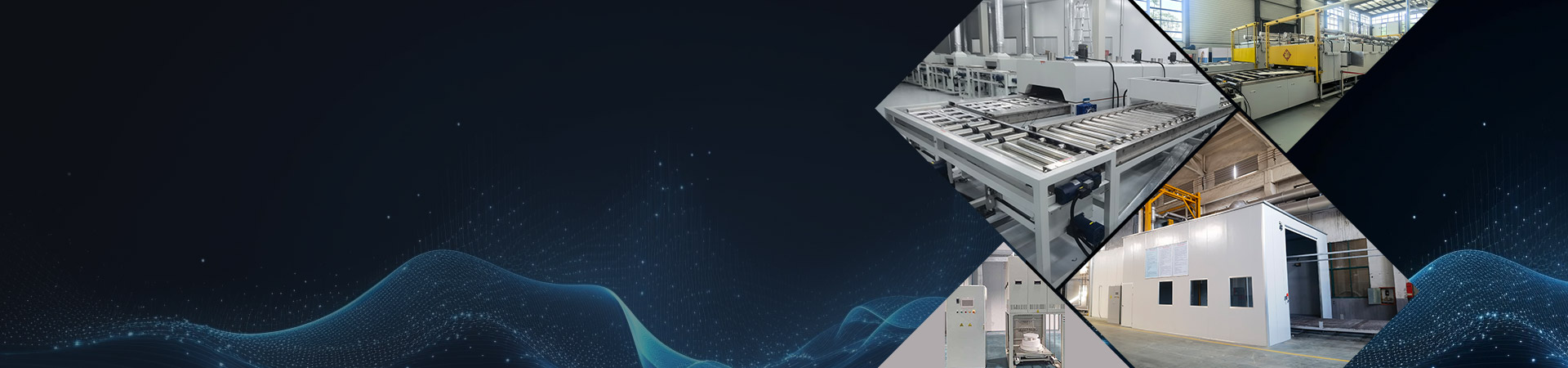
In the world of industrial manufacturing, efficiency, consistency, and scalability are non-negotiable. At the heart of many production lines, a workhorse machine ensures these principles are met: the industrial tunnel oven. Far more than a simple heating chamber, a tunnel oven is a continuous processing system designed for high-volume thermal treatment. This article explores the multifaceted applications of this essential equipment, underscoring why it is a cornerstone of modern industry.
Understanding the Tunnel Oven Principle
An industrial tunnel oven is characterized by its enclosed, elongated chamber through which products travel on a conveyor belt. This design creates a continuous flow, allowing for uninterrupted processing. The interior is typically divided into multiple zones, each with independent temperature and airflow controls. This enables a precise thermal profile—pre-heating, main heating, and cooling/curing—to be applied to the products as they pass through. This method is vastly superior to batch processing for large-scale production, offering unmatched throughput and uniformity.Key Industrial Applications: A Testament to Versatility
The utility of tunnel ovens spans across diverse sectors, proving their adaptability to various thermal processes.1. Curing and Drying CoatingsIn metal fabrication and appliance manufacturing, components often receive powder coatings or liquid paints. A tunnel oven provides the controlled, high-temperature environment necessary to cure these coatings. The process melts and cross-links the polymer resins, creating a durable, protective, and aesthetically pleasing finish. The consistent heat ensures complete curing without runs, sags, or weak spots, which is critical for product quality and longevity [1]. Guanding tunnel ovens are engineered with precise airflow management to achieve perfect cure results for clients in the automotive and machinery sectors.2. Food Processing and BakingThe food industry relies heavily on tunnel ovens for baking, drying, and toasting. From conveyor-baked bread and cookies to drying pet treats and snack foods, these ovens provide uniform heat application essential for consistent color, texture, and moisture removal. The continuous operation aligns perfectly with the high-volume needs of food production, ensuring a steady output of finished goods that meet strict safety and quality standards.3. Electronics and Component AnnealingIn electronics manufacturing, certain components require stress relief or annealing to stabilize their material properties. Tunnel ovens offer a clean and controlled environment for this precise thermal treatment. By subjecting components to a specific temperature profile, internal stresses from fabrication are relieved, improving durability and performance. This application is critical for producing reliable electronic assemblies.4. Curing and Pre-Preg in CompositesThe advanced composites industry uses tunnel ovens for curing pre-impregnated (pre-preg) materials. The precise temperature control is vital for activating the thermoset resins within composite layers, resulting in parts that are strong, lightweight, and dimensionally stable. This is essential for aerospace, automotive, and sporting goods manufacturing.The Guanding Engineering Advantage
Selecting the right tunnel oven is not merely about choosing a heating chamber; it is about integrating a system that enhances your entire production line. Guanding designs its industrial tunnel ovens with a focus on robust construction, energy efficiency, and intelligent control systems. Our engineers work to understand your specific process requirements—be it a particular temperature curve, a specific belt material, or unique airflow needs—to deliver a solution that maximizes productivity and product quality.Conclusion
From applying a tough coating on a steel beam to baking the perfect cracker, the industrial tunnel oven is an indispensable asset. Its ability to deliver consistent, controlled thermal processing at high volumes makes it a driving force behind manufacturing efficiency. For operations where throughput and quality cannot be compromised, a well-engineered tunnel oven is not just an option; it is a necessity.Partner with Guarding to engineer a thermal processing solution that drives your production forward.[1] ASM International. (2002). ASM Handbook, Volume 5: Surface Engineering. Materials Park, OH: ASM International.[2] Fellows, P. J. (2009). Food Processing Technology: Principles and Practice(3rd ed.). Woodhead Publishing.